How to Avoid Police in LAST CALL
Keep heat boring, survive patrol sight lines, and still make it home through city and forest chaos.
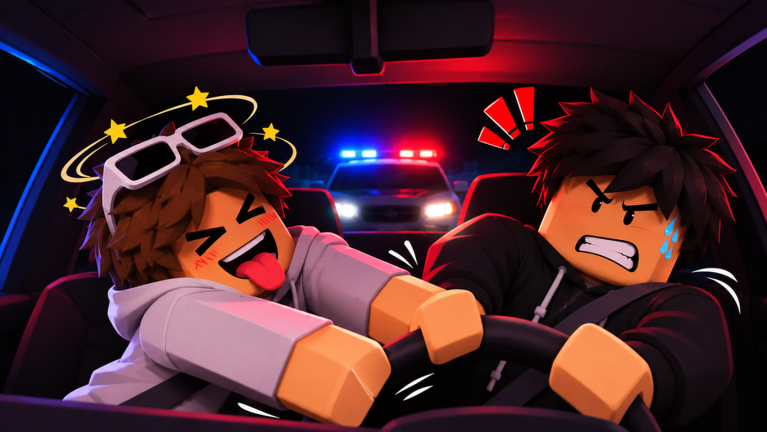
Police patrols are the silent co-author of every LAST CALL [BETA] failure. TAZ Syndicate’s free Roblox co-op chaos racer already pits Driver against Passenger on the ride home; patrols turn that comedy into a three-way fight. Suspicious driving, loud cabin sabotage, and panic corrections after a near miss are how soft attention becomes a run-ending chase.
This guide is heat-first. Pair it with the driver guide for seat fundamentals, the passenger guide if you are the one baiting sirens, how to reach home for route phases, and co-op tips so temporary truces actually stick. New duos should still skim Getting Started and controls before grinding “no chase” attempts.
What “avoid police” really means
You are not speedrunning a stealth sim. You are finishing a late-night drive through city streets and forest roads without looking like a highlight reel. The win condition stays the same: reach home in one piece. Avoiding police is the skill that makes that win possible when the passenger is mid-prank and your hands want to oversteer.
Treat heat like a resource you never want to spend:
- Low heat = boring lines, recoverable sabotage, freedom to take a controlled drift
- Rising heat = shrink speed, delete drama, demand a short passenger cooldown
- Hard pursuit energy = survive first, argue later, abandon style entirely
Suspicion starters (know your own tells)
Most heat spikes begin with one of these:
| Trigger | Why patrols notice | First counter |
|---|---|---|
| Panic swerve after sabotage | Looks intoxicated / reckless | Feather throttle, re-center gently |
| Continuous horn / light spam | Audio-visual “pull me over” flag | Pulse chaos, then go quiet |
| Sidewalk hops and curb clips | Illegal-looking pathing | Return to readable lanes |
| Full-commit drift beside a patrol | Flashy + close = soft lock | Save slides for empty pavement |
| Revenge speeding after a near miss | Turns soft attention into chase | Stabilize before accelerating |
If you cannot name which trigger started the last fail, you will repeat it. Say it out loud in voice chat after each wreck.
City streets: visibility is the enemy
City blocks give patrols long sight lines. That is good for comedy and bad for greedy drivers.
Driver city rules
- Hold steady lanes and predictable turns.
- Use short straights to heal composure—not to max speed into the next intersection.
- After any cabin gag, drive like a model citizen for the next stretch.
- Prefer a dull detour over a stylish shortcut that clips scenery.
- Scan early. Spotting a patrol silhouette before the passenger opens the chaos menu is free advantage.
Passenger city rules (if you still want the round to continue)
- Probe with light distractions first; save hard steering mess for moments when a chase is not already brewing.
- Horn near a quiet residential stretch is funnier—and riskier—than horn in empty nowhere. Know which joke you are telling.
- Honor one “cool it, cop ahead” callout. Betray later. Instant ignore teaches drivers to never communicate.
City success looks uneventful on purpose. Leaving downtown with low heat is a win even if the passenger feels “underutilized.”
Forest roads: rhythm under canopy
Forest roads compress mistakes. Tighter bends, drift temptation, and worse recovery margins mean a single yank mid-corner can look extremely suspicious—or end the car before police even matter.
Driver forest rules
- Enter corners slower than city ego suggests.
- Separate “fun drift” from “required rotation.” Fun drifts next to encounters are heat donations.
- After passenger interference, abort the hero line. Re-stabilize, then re-accelerate.
- Unexpected encounters hurt more when you are already mid-correction—leave margin.
Passenger forest rules
- Time sabotage for mid-bend commitments if your goal is pressure—not if heat is already spicy.
- Combine lights with a short steering mess when tree cover already hurts depth perception.
- Avoid endless spam on long connectors; silence makes the next bend scarier and keeps patrol attention from stacking.
Think of the forest as a rhythm game. Clean arcs between chaos spikes. Broken rhythm feeds both trees and tickets.
The post-sabotage cool-down protocol
The single highest-ROI habit in LAST CALL is the cool-down after a chaos burst:
- Name it — Driver says “cooling” or passenger says “burst done.”
- Shrink inputs — No revenge speed, no second drift for pride.
- Look legal — Steady throttle, centered steering, fewer curb kisses.
- Hold for a stretch — Long enough that soft attention can decay.
- Resume the bit — Passenger may re-open chaos once the car looks boring again.
Skipping step 4 is how near-misses become pursuits. The tier list ranks calm recovery highly for a reason: flash without composure is just a siren request.
Heat checkpoints on the way home
Run these checks at least three times per attempt (same spine as the reach-home walkthrough, but police-specific):
- Early city — Did opening gags already paint you as suspicious?
- City-to-forest transition — Are you carrying noise and bad habits into tighter roads?
- Final approach — Are you speeding because home is close?
Whenever a check fails, both seats should briefly cooperate. Temporary truces are strategy. After the threat passes, the passenger can betray the peace—that is the genre. Deep seat work lives in the driver guide and passenger guide; friendship rules that make truces stick live in co-op tips.
Chase triage: when attention is already loud
Sometimes you failed the cool-down and the fantasy becomes pursuit pressure. Prioritize in this order:
- Keep the car pointed toward home — Endless cat-and-mouse loops feel cool and lose.
- Delete style — No celebratory drifts, no sidewalk “cuts.”
- Mute the cabin — Passenger stops stacking horn/lights/steering for a beat.
- Break line of sight if it helps the route — Corners and foliage can help, but only if they still advance the home line.
- Accept a restart — If the car (or friendship) is cooked, reset clean. Beta runs are short; tilting is optional.
Do not invent supernatural stealth mechanics the BETA does not advertise. Play the readable fantasy: look less guilty, finish the road.
Practice ladder for heat control
- Ghost patrol run — Passenger plays soft; driver practices legal city lines and slow forest entries.
- Burst-and-cool run — Passenger lands one quality combo, then mandatory cool-down; driver practices recovery without speeding.
- Villain-with-veto run — Full passenger pressure, but driver can call one hard veto near a visible patrol per segment.
- Seat reverse — Swap so both players feel how sabotage reads from the road.
Between ladders, check updates—LAST CALL is still BETA (recent Roblox activity around early November 2026)—and skim codes only for real drops. As of November 2026 there are no confirmed promo codes; never trust fake generators. Use scripts with caution and never invent loadstrings; third-party tools can ruin a fair co-op night. For tone and “is this for us?” framing, see Players.
Common police-related mistakes
- Treating cops as a side quest instead of a win-condition threat.
- Flooring it after a curb clip “to escape” when you were not even locked.
- Passenger ignoring veto calls, then blaming the driver for the chase.
- Driver revenge-chaos to “shake” the passenger—usually feeds suspicion.
- Skipping wiki basics on the Guides Hub and then rediscovering heat the hard way every session.
Mindset: boring is how you win
LAST CALL asks whether your friendship can survive the ride home under Mild Crude Humor pressure. Police patrols are the referee that punishes ego. Stay competitive without becoming cruel. Celebrate clean cool-downs. When you roll into the driveway after a night of almost-sirens, the arrival lands harder because you earned it under heat.
Keep the car pointed home, keep the cabin negotiable, and treat every sabotage burst as a temporary storm. That is how duos avoid police long enough to clear LAST CALL runs while TAZ Syndicate keeps polishing the BETA.
Frequently Asked Questions
Quick answers for drivers and passengers.
How do you avoid police in LAST CALL?
Drive calmly after chaos bursts, avoid suspicious swerves and curb clips, skip flashy drifts near patrols, and briefly cool the cabin when heat rises so soft attention does not become a chase.
Does passenger sabotage cause police heat?
It can. Horn, lights, and steering mess make the car look reckless. Timed sabotage is funnier and safer than constant spam beside a patrol.
Should I speed to escape when I see a patrol?
Usually no. Panic speed and sidewalk cuts raise suspicion. Stabilize, look legal, and keep progressing toward home instead of starting a highlight-reel chase.
City or forest—where is police pressure worse?
City blocks often offer longer sight lines; forest roads punish recovery mistakes harder. Manage heat in both: calm city exits, slower forest entries.
Where should we practice heat control as a duo?
Use this page with the driver guide, passenger guide, and co-op tips, then run the burst-and-cool practice ladder.